


■ The foundation
We focus on the four things we can influence.
No one can predict markets. These four compound for or against you every year.
■ Fees

Keep them low.
We disclose every fee in writing before you sign. We take no commissions and no revenue sharing.
■ Taxes

Minimize and defer them.
After-tax return is the return you keep. We harvest losses throughout the yearWatch on YouTube and hold each investment in the type of account that suits its tax treatment.
■ Time horizon

Protect it.
Your plan assigns a time horizon to every dollar, so you are not forced to sell at the wrong moment.
■ Temperament

Stay the course.
Decisions are set in advance and reviewed on a schedule, so your family is better prepared to hold through a downturn.
For long-term investors, these four matter more than any forecast.
■ How we decide
Two principles govern every decision.

Spend fees and complexity deliberately.
Every investment must earn its place against simple, low-cost market exposure.
That benchmark, broad market exposure (what the industry calls beta), costs very little and, managed well, can be highly tax efficient. Anything that costs more, locks up capital longer or adds complexity must offer meaningful diversification or a credible opportunity to outperform. If it offers neither, we pass.

Data and probabilities, not thoughts and feelings.
We follow the evidence, not trends or emotions.
We watch economic and inflation data, earnings and the daily headlinesWatch on YouTube, but few change a long-term decision. We set decisions in advance and revisit them on a disciplined schedule, rather than in the heat of a downturn.
We absorb the noise so your portfolio does not have to.
■ Our discipline
Simple, but not easy.
You should always know what you own, why you own it and what it costs. Keeping it that simple takes careful asset allocation, disciplined selection of each investment vehicle, and the conviction to hold long-term decisions when markets turn volatile.

We build in the right order.
First we decide what to own, then we find a low-cost, tax-efficient way to own it.
■ step one

Exposure
Portfolio construction matters.
Research by Brinson, Hood and Beebower found that asset allocation explained most of the variation in a typical fund’s returns over time.¹ Which markets you own, and in what proportion, is the decision that matters most.
■ step two

Efficiency
Then we find a low-cost, tax-efficient way to own it.
Direct indexing at the core, active management in fixed income where it can earn its fee, and evergreen structures for alternatives.
■ Public equities
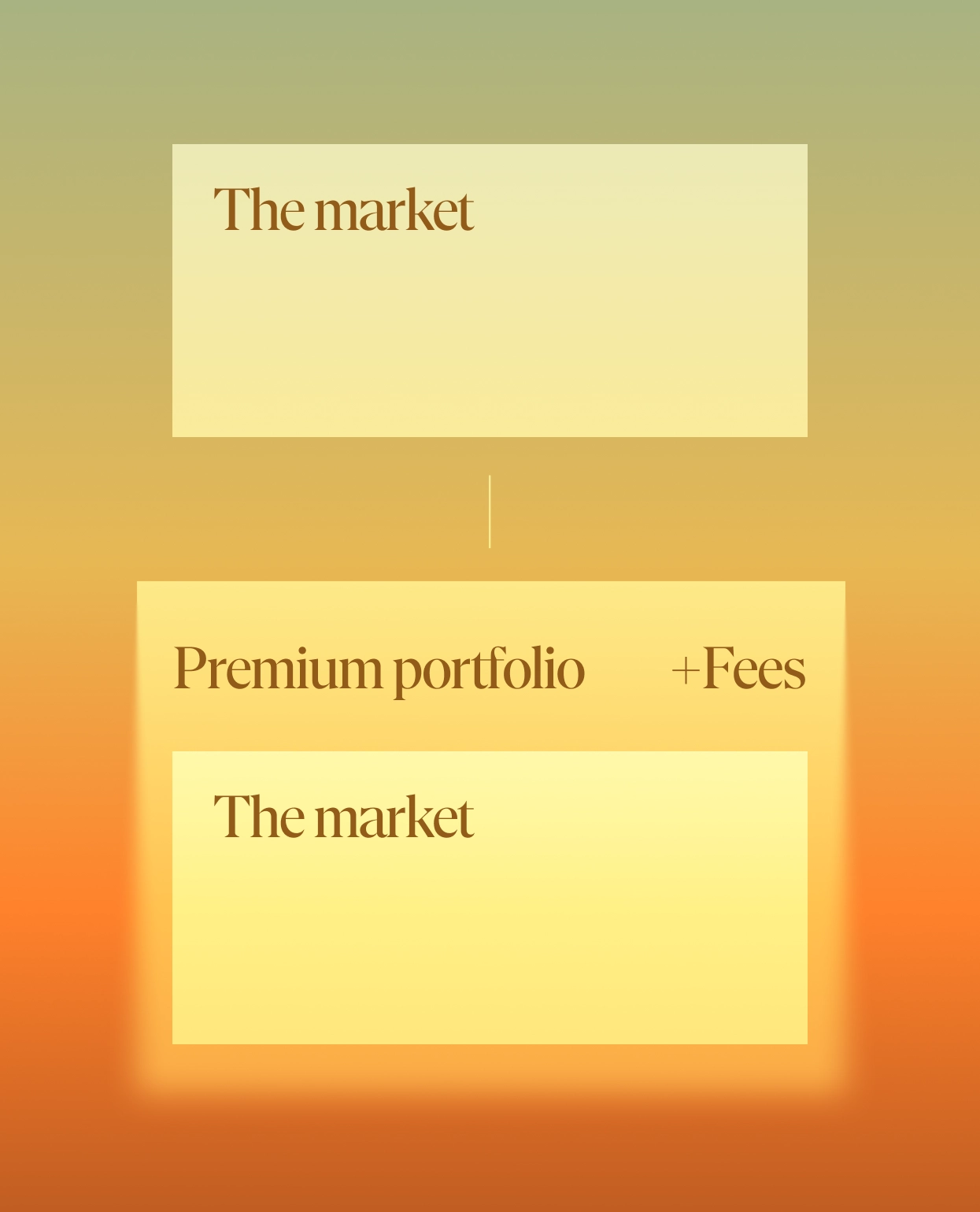
Paying a premium for market exposure rarely pays off.
In public equities, we own the market directly instead of paying for active management.
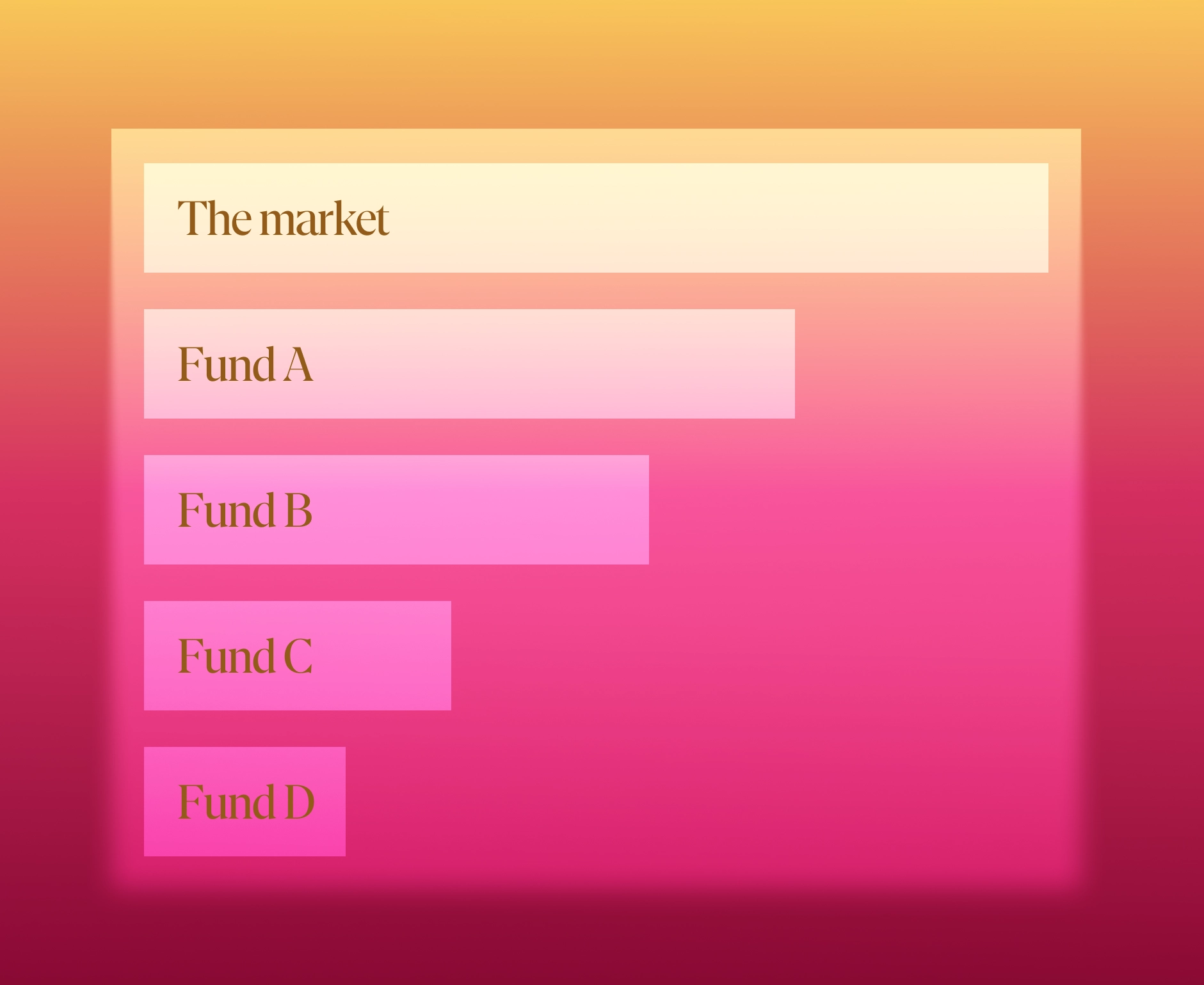
Active managers aim to beat their benchmark. Over long periods, the evidence shows most do not.
Direct indexing
You own the individual stocks of five broad indexes, held directly in your account, not a fund. Costs stay low, losses can be harvested stock by stockWatch on YouTube, and the portfolio can be built around a concentrated positionWatch on YouTube or companies you prefer not to own.
Beyond direct indexing
Where it fits, we add tax-aware long/short strategies and ordinary loss and short-term income harvesting, through managers such as AQR and Quantinno.
The goal is not to beat the market. It is to compound efficiently, after fees and after taxes.
Pat Dwyer and Greg Pool hold an ownership stake in Vise, which runs client public equity, including direct indexing. Pat Dwyer holds an ownership stake in Arch, which handles administration and reporting for client private investments. These stakes create an incentive for Aligned to recommend these providers. Clients pay Aligned’s advisory fee, plus a direct indexing fee to Vise on assets in that strategy.
■ The evidence
The longer the horizon, the stronger the case for owning the market.
After taxes, the case is stronger still: owning the market keeps turnover low, so fewer capital gains are typically realized along the way.
79%
of active large-cap U.S. equity funds underperformed the S&P 500 in 2025
0 of 22
equity fund categories had a majority of active managers beat their benchmark over 15 years
92%
of active U.S. equity funds trailed their benchmark over 20 years²
² S&P Dow Jones Indices, SPIVA U.S. Scorecard Year-End 2025. Data as of December 31, 2025. Past performance is no guarantee of future results.
We build our views directly into your index.
No additional fund, and no added fund fees.
We adjust weightings inside the index you already own, so tax-loss harvesting continues around each position.
Each tilt must meet three tests:
01
Structural, measurable evidence, not sentiment.
02
A ten-year view, so headlines do not whipsaw it.
03
Sized so that being wrong should not derail your plan.
Today those views are that AI's gains will reach the companies using the technology, not only those selling it; that Asia sits at the center of the hardware build-outWatch on YouTube; and that physical infrastructure carries it. The positions will change with the evidence. The standard will not.
■ Fixed income
Where active management can earn its keep.
In bonds, skilled managers can have a real edge. We pay for it selectively.
Bond issues outnumber stocks, mostly trade over the counter and resist indexing. Over the ten years ending June 2026, active bond funds beat their median passive peer more often than active equity funds.³
We pay selectively: municipal bonds anchor high-tax-state allocations, and a few managers we believe earn their fee cover taxable bonds.
³ Morningstar Direct, PIMCO. Ten-year returns as of June 30, 2026, comparing Intermediate Core and Core-Plus Bond funds with Large Blend equity funds (institutional shares). Past performance is no guarantee of future results.
■ Income
Cash flow, built around what you keep after tax.
We build income portfolios the way we build equity portfolios: after-tax first.
Tax-exempt municipal bonds, qualified dividends and preferreds are the foundation. We add other tax-efficient forms of cash flow, including evergreen real estate and infrastructure investments whose distributions can include a return of principal.
■ 01

Tax-advantaged income
Chosen for what it pays after tax, not its headline yield.
■ 02

Evergreen real estate
Income-producing property in open-ended funds, with distributions that can include a return of principal.
■ 03

Evergreen infrastructure
Long-lived real assets, held for long-term cash flow.
Alternatives on your terms.
Evergreen by default. Complexity only when it earns its place.
We treat alternatives as a core, long-term part of a portfolioWatch on YouTube. They can broaden diversification and provide access to investments that are otherwise hard to reach, and we hold them to the same standard as everything else.

Simple where possible.
Private equity, private creditWatch on YouTube, infrastructureWatch on YouTube and real estate once required expensive, capital-locking funds. For eligible investors, many are now available through evergreen structures with lower fees, simpler terms and periodic liquidity, subject to redemption limits. Evergreen is our default. For real estate you already own, a 1031 exchange into a Delaware Statutory Trust (DST) can defer the tax on a sale and diversify the proceeds across more properties.
Complex only when it earns it.
We accept long lockups and higher fees in two cases. The first is exposure that cannot be reached any other way, such as early-stage venture capitalWatch on YouTube, direct single-company private ownership through an SPV, or direct secondaries in technology companies. The second is a manager with a clear, evidence-based edge. Both are rare.Watch on YouTube
Skeptical of the rest.
In our view, many hedge funds have not justified their fees, and structured notes often wrap meaningful costs around outcomes a simple mix of stocks and bonds can approximate. Most of these do not clear our after-fee, after-tax bar.
We follow the evidence, not the revenue.
No products of our own, no quotas, and every fee disclosed. Every portfolio begins with a plan built around what you want your wealth to make possible.